
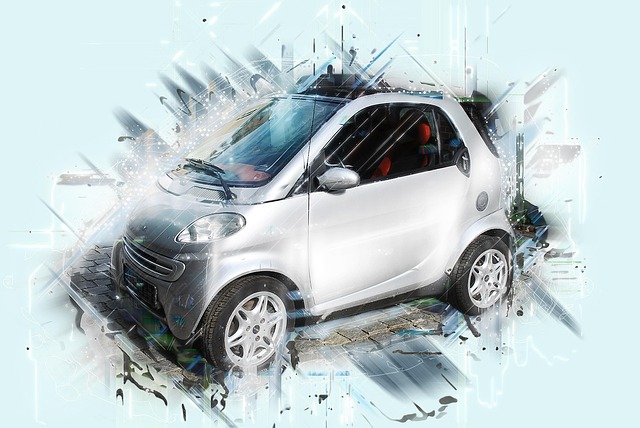
Autonomous Emergency Braking (AEB) is a critical safety feature in modern vehicles, leveraging sensors (camera, LiDAR, radar), machine learning, and real-time data processing to predict and mitigate collisions. Select Smart Car Tech integrates these technologies for enhanced accuracy, reliable performance, and continuous monitoring. Global regulations mandate AEB implementation, with future trends including customizable risk displays, advanced vehicle security, and optimized routing. Consumer demand drives continuous evolution, ensuring AEB remains a key safety feature for safer roads.
The autonomous emergency braking (AEB) system stands as a cornerstone of modern vehicle safety, addressing the pressing need to mitigate collision risks on our roads. With traffic accidents being a leading cause of injury and mortality worldwide, developing intelligent solutions like AEB has become paramount. This article delves into the intricacies of AEB systems, exploring how advanced driver-assistance technologies (ADAS), including Select Smart Car Tech, are revolutionizing road safety by detecting potential hazards and autonomously applying brakes to prevent or reduce the impact of collisions.
- Understanding Autonomous Emergency Braking Basics
- How Select Smart Car Tech Enhances Safety
- Sensor Technologies for Accurate Detection
- The Role of Advanced Algorithms in Decision Making
- Regulations and Future Trends in Automotive Safety
Understanding Autonomous Emergency Braking Basics

The Autonomous Emergency Braking (AEB) system is a groundbreaking advancement in automotive safety technology. At its core, AEB utilizes a combination of sensors, cameras, and advanced algorithms to detect potential collisions and apply the brakes autonomously, significantly reducing the risk of accidents. This innovative feature has become a standard in many modern vehicles, thanks to its ability to respond faster than human drivers, making it a critical component in the evolution towards autonomous driving.
Understanding AEB involves grasping how it integrates with other smart car technologies. Select vehicles equipped with advanced driver-assistance systems (ADAS) employ mobile app synchronization for remote monitoring and control of vehicle diagnostics. This not only enhances safety but also allows owners to stay connected, receiving real-time alerts about potential issues. Moreover, these systems can be linked to fast-charging stations, ensuring eco-friendly driving practices while offering convenience. For instance, Tesla’s Autopilot feature includes AEB and integrates seamlessly with their mobile app, enabling drivers to monitor speed, distance, and other vital parameters from the comfort of their smartphones.
AEB also leverages vehicle diagnostics monitoring to predict and avoid accidents. By analyzing data from sensors like radar, lidar, and cameras, these systems can detect obstacles, pedestrians, and traffic signs. For example, Volvo’s City Safety system uses AEB to prevent or mitigate low-speed collisions in urban environments. In addition to enhancing safety, AEB contributes to eco-driving assistance by reducing the need for sudden braking, thereby improving fuel efficiency.
When considering a vehicle with AEB, it’s essential to look for features like automatic emergency braking, forward collision warning, and pedestrian detection. These systems should be backed by robust vehicle diagnostics and home automation controls that allow owners to integrate their cars into smart homes. By selecting vehicles with these advanced safety features, drivers not only gain peace of mind but also contribute to a future where roads are safer and more interconnected through technology.
How Select Smart Car Tech Enhances Safety

The integration of Select Smart Car Tech represents a significant leap forward in automotive safety engineering. Advanced systems like autonomous emergency braking (AEB) leverage sophisticated sensors, machine learning algorithms, and real-time data processing to predict and mitigate collisions. These technologies don’t just detect obstacles; they analyze driving conditions, including weather and road surface dynamics, enabling more precise braking interventions. For instance, some AEB systems can even anticipate potential hazards in low-visibility scenarios, allowing for faster responses than human drivers.
One standout feature of modern Select Smart Car Tech is its ability to enhance electric vehicle (EV) range extensions through efficient energy management. Advanced encryption protocols safeguard the integrity of onboard data and communications, ensuring secure over-the-air updates and diagnostics without compromising performance or range. Moreover, head-up display projections offer a seamless way to convey critical safety information, such as AEB warnings and pending obstacles, directly into the driver’s line of sight, minimizing distraction and enhancing situational awareness.
To maximize these benefits, automotive manufacturers must prioritize integrating Select Smart Car Tech seamlessly into vehicle designs. Regular software updates and over-the-air patches are crucial for keeping systems current with the latest safety improvements and bug fixes. Drivers should also remain informed about their vehicle’s capabilities and limitations, enabling them to make informed decisions while behind the wheel. By embracing these advancements, we not only enhance road safety but also contribute to a more sustainable future through improved EV range and efficient energy management.
Sensor Technologies for Accurate Detection

The heart of any effective Autonomous Emergency Braking (AEB) system lies in its sensor technologies, which must accurately detect and assess potential collisions in real-time. These sensors play a pivotal role in enabling vehicles to anticipate and react to unforeseen hazards, significantly enhancing road safety. Among the array of sensor options, camera-based systems, LiDAR, and Radar are commonly employed, each offering unique advantages and limitations.
Camera sensors, with their ability to capture high-resolution images, are increasingly integrated into modern vehicles. Machine learning applications, particularly in computer vision, power these systems, enabling them to recognize objects, track movements, and interpret traffic signals. For instance, Tesla’s Autopilot system leverages advanced camera technology, coupled with machine learning, to detect and respond to various road conditions. However, camera sensors can face challenges in low-light conditions or when obstructed by adverse weather.
LiDAR, on the other hand, emits laser pulses to create precise 3D maps of the surroundings. This technology excels in providing detailed range data, making it invaluable for autonomous vehicles navigating complex environments. Electric vehicle range extensions, for instance, can benefit from LiDAR’s ability to optimize energy consumption by accurately gauging distances. Furthermore, advanced encryption protocols can safeguard the data transmitted by LiDAR sensors, ensuring secure communication between the vehicle and its systems.
Radar sensors, known for their long-range detection capabilities, emit radio waves to identify objects. They are particularly effective in penetrating poor weather conditions, making them a reliable choice for AEB systems. Integrating these sensor technologies through a fusion system, where data is shared and cross-referenced, enhances accuracy and reliability. This approach, combined with machine learning algorithms, allows for more precise predictions, ultimately leading to safer autonomous driving experiences.
The Role of Advanced Algorithms in Decision Making

The heart of any autonomous emergency braking (AEB) system lies in its advanced algorithms, which play a pivotal role in decision-making processes. These sophisticated mathematical models are designed to process vast amounts of sensor data in real-time, enabling the vehicle to accurately perceive and predict potential collision scenarios. The evolution of AEB technology has significantly contributed to enhancing road safety by implementing low-impact driving techniques and reducing the severity of accidents.
One of the key challenges in developing effective AEB algorithms is achieving a balance between responsiveness and precision. Modern systems employ machine learning techniques, such as deep neural networks, to analyze complex patterns from cameras, lidar, and radar sensors. For instance, these algorithms can recognize not only obstacles but also their velocity, direction, and potential threat levels. By continuously learning from real-world data, AEB systems become increasingly adept at making split-second decisions that rival human drivers’ reflexes.
Real-time performance tracking is essential to ensure the system’s effectiveness. Car connectivity solutions integrated into Select Smart Car Tech enable continuous monitoring of the AEB’s response time, accuracy, and overall performance. This data is invaluable for fine-tuning algorithms and improving decision-making processes. For example, by analyzing real-world scenarios, engineers can optimize the system’s sensitivity to different weather conditions, ensuring optimal performance in various environments. The ultimate goal is to minimize false alarms while maximizing the system’s ability to react swiftly and accurately during emergencies.
Moreover, the integration of autonomous vehicle navigation into AEB systems adds another layer of complexity and benefit. By combining predictive navigation data with sensor inputs, the algorithms can anticipate potential hazards further ahead, allowing for more advanced braking interventions. This holistic approach to safety not only enhances the overall driving experience but also contributes to reducing traffic accidents caused by human error. As autonomous vehicle technology continues to advance, the role of sophisticated algorithms in AEB systems will become increasingly critical in shaping the future of safer, more efficient transportation.
Regulations and Future Trends in Automotive Safety
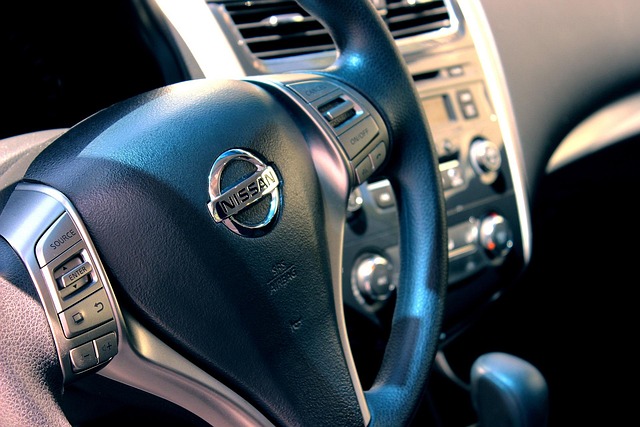
The development of autonomous emergency braking (AEB) systems is a significant step forward in automotive safety regulation. These advanced technologies are designed to detect potential collisions and apply the brakes autonomously, significantly reducing the risk of accidents and saving lives. Global regulatory bodies have recognized the importance of AEB, leading to mandatory implementation in many regions. For instance, the European Union’s Active Safety Directive requires all new car models to be equipped with AEB as standard from 2014 onwards. Such regulations drive innovation in Select Smart Car Tech, pushing manufacturers to incorporate sophisticated sensors and algorithms into their vehicles.
Looking ahead, future trends in automotive safety will further enhance the capabilities of AEB systems. Customizable instrument clusters will provide drivers with real-time data on collision risk, allowing them to make informed decisions. Vehicle security enhancements, including advanced encryption and authentication protocols, will protect against cyberattacks that could manipulate safety systems. Commercial vehicle optimization will also benefit from these technologies, improving fuel-efficient routing and reducing emissions through precise, predictive driving behaviors. For example, fleet management companies can leverage AEB data to optimize routes, minimizing stop-and-go traffic and enhancing overall efficiency.
In addition to regulatory mandates, consumer demand plays a pivotal role in shaping the future of AEB. As drivers become more tech-savvy and conscious of safety features, they will expect advanced emergency braking systems as standard. Manufacturers must keep pace with these expectations by continuously refining their Select Smart Car Tech, incorporating machine learning, and improving decision-making algorithms. This ongoing evolution ensures that AEB remains a game-changer in automotive safety, contributing to a future where road accidents become increasingly rare and driving is safer for all.
The autonomous emergency braking (AEB) system represents a significant advancement in automotive safety, leveraging Select Smart Car Tech to proactively prevent collisions. By integrating sophisticated sensor technologies for precise detection and advanced algorithms for intelligent decision-making, AEB systems offer crucial protection for drivers, passengers, and pedestrians alike. Key insights from this article underscore the importance of these innovations, highlighting how they navigate complex road scenarios with remarkable accuracy. Moreover, regulatory frameworks and future trends point to an increasingly interconnected and safe automotive landscape, where Select Smart Car Tech continues to play a pivotal role in enhancing overall safety standards. Practical next steps include encouraging wider adoption of AEB systems, ongoing research into sensor technology improvements, and continued development of robust algorithms to address remaining challenges.