

The automotive industry is undergoing a major transformation driven by smart car tech and sustainability goals. Key trends include congestion-aware navigation systems, low-emission vehicles (especially electric trucks and buses), and autonomous driving capabilities (Levels 4 & 5). Select Smart Car Tech focuses on battery management, software updates, driver training, and eco-driving assistance. Future mobility emphasizes user experience with connected technology, safety features like Autopilot, keyless entry, and in-cabin tech for efficient, environmentally friendly driving experiences.
The future of transportation is taking shape through innovative vehicle design trends, driven by advancements in smart car tech. As we navigate towards a more sustainable and connected world, understanding these emerging trends is crucial for both automotive manufacturers and consumers. The current landscape is characterized by a scramble to integrate cutting-edge technologies while addressing environmental concerns. This article delves into the most promising futurist vehicle design trends, focusing on how Select Smart Car Tech is revolutionizing the industry with its advanced features and sustainable practices. By exploring these developments, we aim to provide valuable insights for those eager to stay ahead in this transformative era of motoring.
- Evolving Designs: From Concept to Smart Car Tech Integration
- Sustainable Futures: Electric and Autonomous Vehicle Trends
- The User Experience: Enhancing In-Cabin Technology for Future Mobility
Evolving Designs: From Concept to Smart Car Tech Integration

The evolution of vehicle design is undergoing a profound transformation as the automotive industry embraces cutting-edge technology. Today’s focus shifts from purely aesthetic concepts to practical implementations, driven by advancements in smart car tech and a growing need for sustainable transportation solutions. This shift is evident in the rapid integration of intelligent systems into commercial vehicles, optimizing not only passenger comfort but also addressing pressing environmental concerns.
One prominent trend is the emergence of congestion-aware navigation systems. These innovative technologies leverage real-time data to navigate urban traffic efficiently. By predicting and adapting to congestion patterns, these systems enable smoother journeys, reducing emissions and improving overall road productivity. For instance, advanced algorithms can reroute vehicles, minimizing idle time and fuel consumption in dense urban areas. This is particularly impactful in metropolitan regions where traffic congestion is a persistent issue, highlighting the potential for smart car tech to revolutionize daily commutes.
Furthermore, the transition towards low-emission vehicles is gaining momentum, thanks to evolving design strategies and the integration of clean energy technologies. Electric vehicle (EV) architectures are becoming more sophisticated, offering increased range and faster charging times while reducing dependency on fossil fuels. This trend extends beyond passenger cars to commercial vehicles, with electric trucks and buses now playing a pivotal role in sustainable urban mobility. As governments worldwide implement stricter emission standards, the market is witnessing a surge in demand for eco-friendly transport solutions. Manufacturers are responding by investing heavily in research and development of green technologies, ensuring that future vehicles meet the challenges of environmental sustainability while delivering enhanced performance.
Sustainable Futures: Electric and Autonomous Vehicle Trends
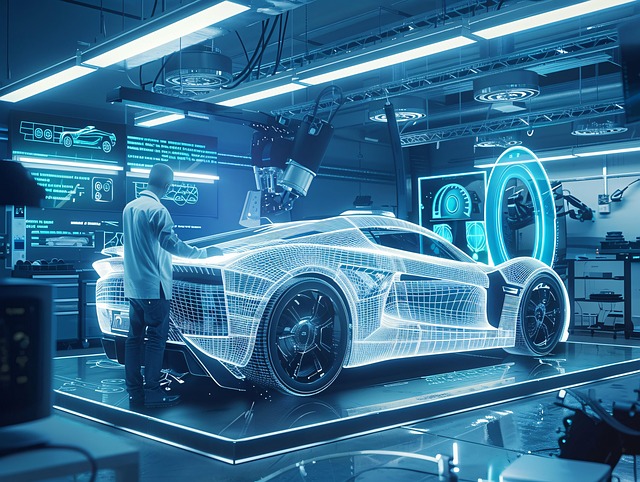
The future of transportation is taking shape through the integration of smart car tech, with a growing focus on sustainability. Electric vehicles (EVs) are no longer niche; they’re becoming mainstream, driven by stringent environmental regulations and consumer demand for eco-friendly options. According to the International Energy Agency, electric cars’ global share reached 10% in 2021, up from just 2% a decade earlier. This trend is set to accelerate as advancements in battery technology continue to boost range and reduce charging times.
Autonomous driving, another key component of futuristic vehicle design, promises to revolutionize mobility. Advanced Driver Assistance Systems (ADAS) are becoming increasingly sophisticated, with features like parallel parking guidance, lane-keeping assist, and adaptive cruise control now available in many models. These systems leverage a combination of sensors, cameras, and advanced algorithms to enhance safety and reduce driver workload. Leading automotive manufacturers are also exploring Level 4 and Level 5 autonomy, aiming for fully self-driving cars capable of navigating complex urban environments without human intervention.
Selecting the right smart car tech is crucial for automakers to remain competitive. Integrating these innovations seamlessly requires careful consideration of factors like battery management, software updates, and driver training. For instance, implementing home automation controls through the vehicle can facilitate a more connected lifestyle, allowing drivers to manage their homes remotely. Eco-driving assistance features, such as adaptive fuel efficiency systems that optimize based on real-time conditions, contribute to reduced emissions and improved overall sustainability. As we move forward, automakers must prioritize consumer needs for safety, convenience, and environmental responsibility, ensuring that the vehicles of tomorrow are not only futuristic but also functional and responsible.
The User Experience: Enhancing In-Cabin Technology for Future Mobility

The future of mobility is not just about sleek designs and electric power; it’s equally defined by how well vehicles cater to the user experience, especially within the cabin. As we move towards a more connected and environmentally conscious world, in-cabin technology is evolving at a rapid pace, promising to revolutionize how drivers interact with their vehicles. At the heart of this transformation lies the integration of smart car tech that enhances comfort, safety, and efficiency.
One key area of focus is the implementation of keyless entry systems, which not only offer unparalleled convenience but also contribute to a seamless user journey. These systems, coupled with advanced driver assistance features, enable a more relaxed and stress-free driving experience. For instance, Tesla’s Autopilot system has set new standards in semi-autonomous driving, while other manufacturers are incorporating similar technologies, making long drives more enjoyable and safer. Furthermore, as fuel efficiency becomes a paramount concern, smart tech plays a pivotal role in optimizing engine performance and reducing emissions. Select Smart Car Tech that employs real-time data analysis to fine-tune driving patterns, resulting in significant improvements in fuel economy without compromising on driving dynamics.
Green driving tips are becoming integral to the modern vehicle’s DNA, and public charging networks are expanding, making electric mobility more accessible. Car insurance based on usage has also gained traction, offering drivers flexible coverage that aligns with their individual driving habits. This data-driven approach not only incentivizes responsible driving but also promotes sustainable practices. As we navigate an evolving landscape of mobility, the continuous enhancement of in-cabin technology will be a key differentiator for vehicle manufacturers. By prioritizing user experience and embracing cutting-edge smart car tech, the future of driving promises to be more connected, efficient, and environmentally friendly.
Future vehicle design is characterized by a dynamic interplay of innovative technology and sustainable practices. Key trends, as explored, highlight the critical role of Select Smart Car Tech integration for enhancing user experiences while addressing environmental concerns. The evolution from concept to smart car tech integration signifies a significant leap forward, with electric and autonomous vehicles poised to redefine mobility. By focusing on these emerging trends, manufacturers can foster a future where advanced in-cabin technology seamlessly merges with eco-friendly designs, revolutionizing the way we navigate our world.